
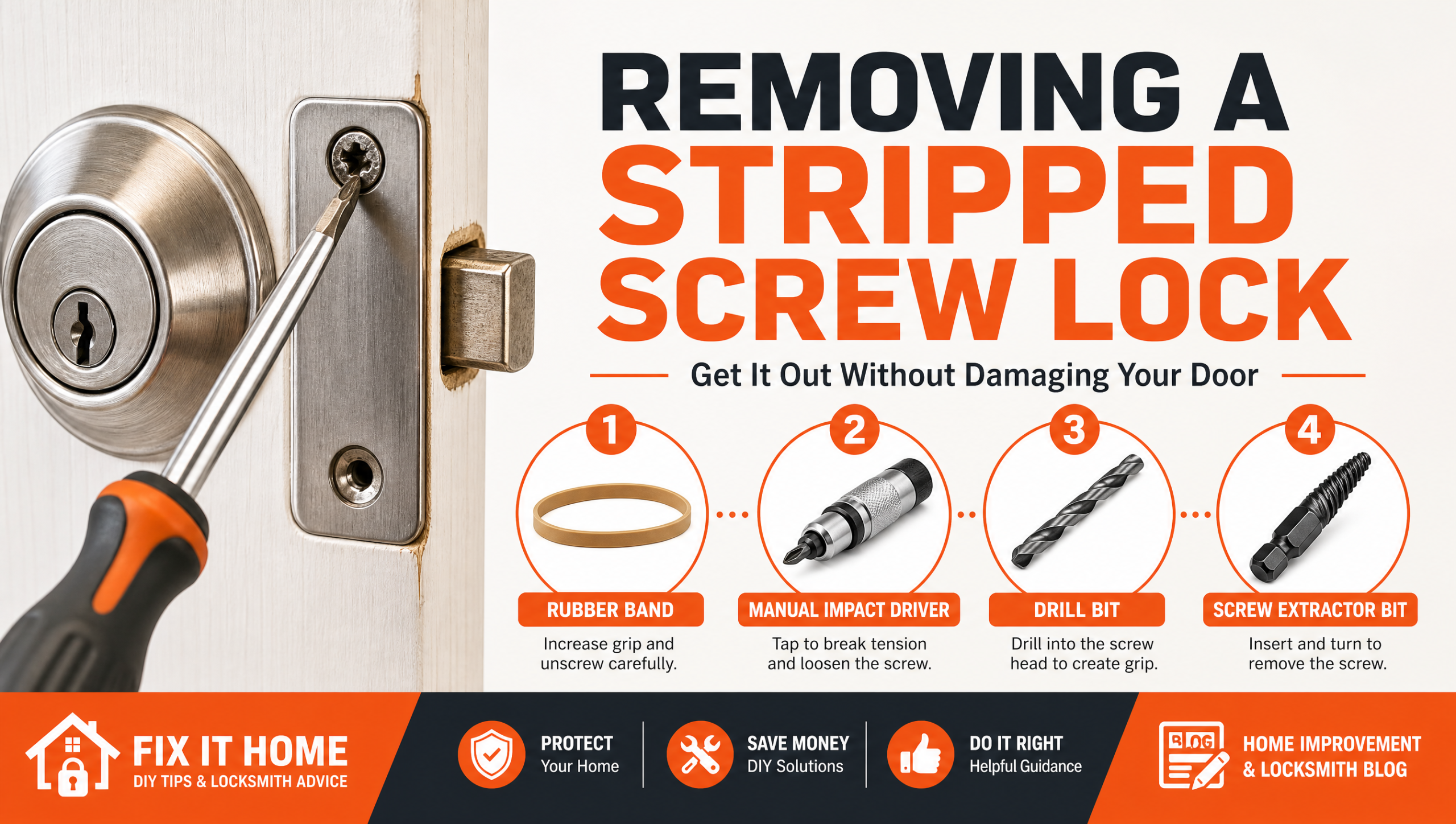
A screwdriver that spins uselessly inside a rounded-out screw head is one of the most frustrating problems a homeowner runs into when a deadbolt or door handle needs attention. The fastener will not back out, the head is chewed flat, and forcing it harder only risks gouging the door or cracking the lock housing. The good news is that with the right grip, the correct bit, and a steady hand, a stripped fastener almost always comes free without harming the hardware around it. Below, our Mesa team walks through the exact field methods we trust, so read on before you reach for a power drill.
Removing a stripped screw lock comes down to restoring grip on a rounded head — a rubber band for traction, a manual impact driver, a left-handed drill bit, or a screw-extractor set — and then backing the fastener out under control while shielding the lock face and the surrounding door from scratches and burrs.
Why Lock Screws Strip in the First Place
A stripped screw is rarely bad luck. It usually traces to a mismatched driver — a Phillips tip seated in a square or combination head — or to overtightening that rounds the cross slots. Residential hardware compounds the problem because many face screws are soft brass that deforms under modest force. Add the heat-and-dust cycles Mesa hardware endures, and a fastener that was snug at installation can seize against corroded threads. Each removal attempt with the wrong tool shaves a little more metal until the driver has nothing left to bite.
This matters for more than convenience. A loose or seized screw on a strike plate, a thumbturn lock, or a handleset undermines the alignment the bolt depends on, which weakens overall deadbolt security. If you are servicing entry hardware, our residential locksmith team in Mesa handles these repairs without sacrificing the door security you rely on every day.
The Tools That Actually Work
You do not need a workshop to free a stripped screw. A handful of low-impact methods solve most cases.
Grip and Traction Fixes
The simplest trick is a wide rubber band. Lay it flat over the damaged head, press your driver firmly into it, and turn with steady downward pressure. The rubber fills the worn slots and bites where bare steel slips. A dab of valve-grinding compound or even fine abrasive cleanser between bit and head does the same thing through grit.
Mechanical Removal
When traction is not enough, step up to mechanical leverage. A manual impact driver — a hand tool you strike with a mallet — converts a hammer blow into a sharp rotational twist that breaks a frozen fastener loose without chewing the head further. If the screw still refuses, a left-handed drill bit (one that cuts counterclockwise) often grabs and reverses the screw as it bores. The dedicated solution is a screw-extractor set, a tapered, reverse-threaded bit that digs into a pre-drilled pilot hole and winds the fastener out. For any screw head standing proud of the surface, locking pliers clamped tight to the shoulder give you direct turning force.
Step-by-Step Method for Removing a Stripped Screw Lock
Work through these stages in order and stop once one of them works.
- Clear and assess. Wipe the head clean, identify the original drive type, and confirm the screw is not painted or glued in place.
- Try traction first. Seat the rubber-band method with firm, slow pressure before anything more aggressive.
- Apply controlled force. Move to the manual impact driver, striking squarely so the bit stays centered.
- Drill if needed. Switch to a left-handed bit or extractor only after traction and impact fail, drilling a shallow pilot at low speed.
- Back it out and inspect. Once the screw turns, remove it by hand, then check the threads in the door or jamb for damage before reinstalling.
The comparison below outlines how we match each method to the situation in the field.
| Removal Method | How It Works | Best Used When | Risk to Lock & Door |
|---|---|---|---|
| Rubber band | Fills worn slots to restore driver grip | Head is lightly rounded | Very low |
| Abrasive grit / valve compound | Adds friction between bit and head | Smooth, polished screw heads | Very low |
| Manual impact driver | Hammer blow becomes a sharp turning twist | Screw is frozen but head is intact | Low |
| Locking pliers / vise grips | Clamps the shoulder for direct leverage | Screw head stands proud of the surface | Low |
| Left-handed drill bit | Counterclockwise bit grabs and reverses screw | Head is too worn for any driver | Moderate |
| Screw-extractor set | Reverse-threaded bit winds out a pilot-drilled screw | Head is destroyed or recessed | Moderate |
| Rotary-tool slot + flathead | Cuts a fresh straight slot for a flat driver | Accessible head with room to cut | Moderate to high |
| Penetrating lubricant soak | Breaks down corrosion binding the threads | Corroded or weather-seized screws | Very low |
| Professional extraction | Specialty tools, thread inserts, replacement hardware | Snapped, flush, or security-door screws | Minimal under expert handling |
Protecting the Lock and Door From Damage
The removal method matters less than the care you take around it. Mask the lock face and the door with painter’s tape so a slipped bit leaves no scratch, and cut a cardboard shield to catch metal shavings before they grind into the finish. Keep any drill at its lowest speed: high RPM overheats soft brass and widens the hole you are trying to save. Vacuum filings as you go, because loose grit works its way into the cylinder and can compromise the very deadbolt installation you are protecting. If a thread tears out, a slightly longer or larger-gauge replacement screw usually restores a solid bite without a full hardware swap.
Pro Tip From the Field
After more than a decade pulling seized fasteners out of Mesa door hardware, here is the lesson that saves the most locks: match the driver to the screw before the first turn, and let the tool do the work. Most strips we repair were created by a driver one size too small forced at an angle. We keep a magnetic, multi-bit driver on every truck and seat the bit fully before applying pressure, never at a tilt.
One more field habit — a single drop of penetrating lubricant worked into a corroded thread, then left to soak while you set up your tools, loosens far more screws than brute force ever will. The same patience we bring to rekeying locks applies here: small, deliberate moves protect the hardware, and that discipline is what keeps a repair from turning into a replacement. It is the same care we describe in our guide to removing a stubborn key retainer on a padlock.
When a Professional Locksmith Should Take Over
Some situations move past a DIY fix. A screw that has snapped flush, a stripped thread inside a metal jamb, a high-security cylinder, or a thumbturn lock that no longer seats squarely all call for a trained hand. A professional locksmith in Mesa carries extraction tools, thread inserts, and replacement hardware that a household toolbox does not, and we follow the workmanship standards published by the Builders Hardware Manufacturers Association and the Associated Locksmiths of America. Forcing a damaged fastener on a security door risks the alignment that protects your home, and a botched removal often turns a minor fix into a full hardware replacement. When the hardware is already worn, our team can advise on a clean high-security lock and key upgrade rather than nursing a failing assembly.
Frequently Asked Questions
Keep Your Mesa Door Hardware Solid and Secure
A stripped screw looks like a small annoyance, yet it sits at the exact point where your hardware meets your door — the difference between a bolt that holds and one that rattles loose. The methods above free most fasteners without a mark, and the right follow-up keeps your home safety intact. If a screw has you stuck, or you would simply like a trained set of eyes on your entry hardware, let our certified technicians audit your doors and reinforce every weak point. You can learn more about our team, browse our full residential locksmith services, and reach out through our contact page to schedule a security audit or hardware installation. Find us and read verified reviews on our Google Business listing, then call Locksmith Near Me in Mesa to protect the door that protects everything behind it.