
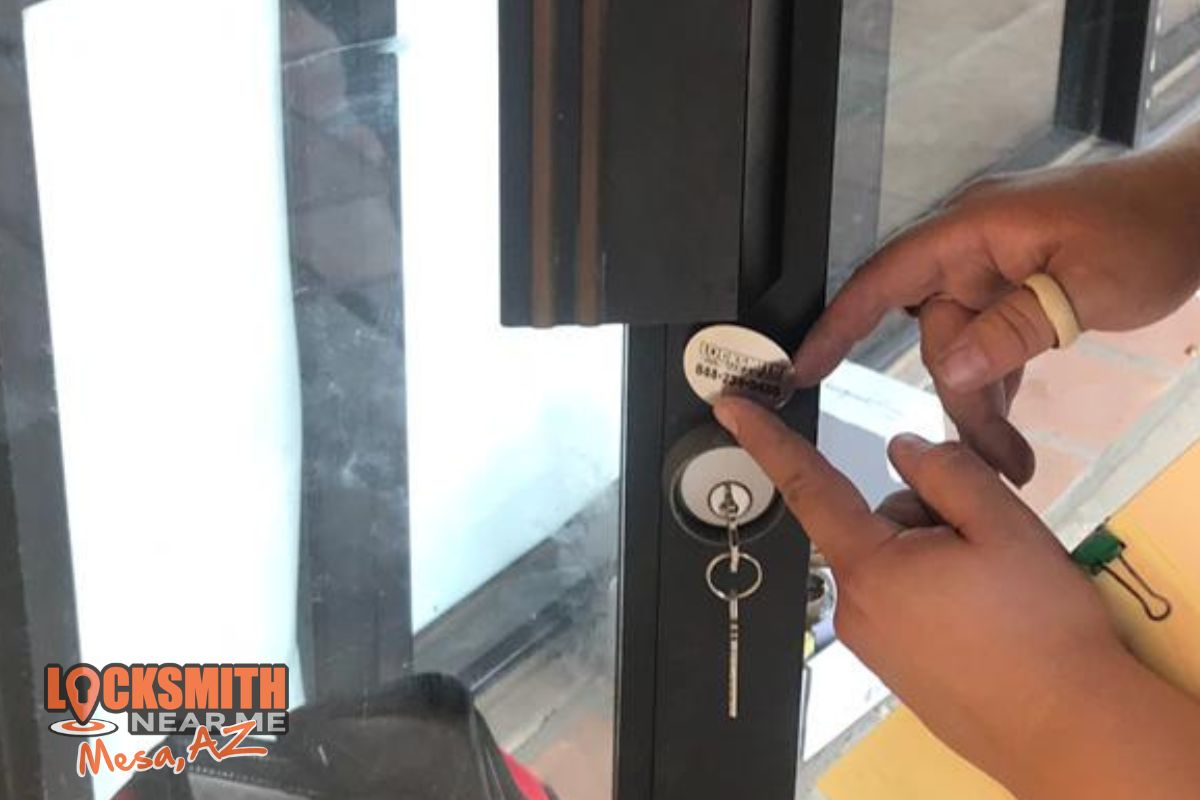
Most “lock problems” in Mesa aren’t random failures—they’re friction, alignment, or key-control issues that show up when heat expansion and dust push worn hardware past its tolerances. The right fix depends on what’s actually failing: the keyway/cylinder, the latch/strike alignment, or the door’s geometry—not just the lock brand.
If you’re in Mesa and the lock suddenly feels stiff, the key turns rough, or the deadbolt “almost” throws, you’re seeing a predictable pattern in the Phoenix Metro: doors and frames move with temperature, dust dries out lubrication, and everyday wear changes how tightly parts fit.
This is exactly the kind of call our team handles through our residential locksmith services—and the best outcomes happen when you choose the fix that matches the failure mode, not the most expensive option.
If you want to confirm what you’re dealing with before you spend money, this guide breaks down when to rekey, when to change locks, and when the real fix is repair/alignment work. Directions and reviews: Google Maps.
Rekey vs Lock Change vs Repair: What Each Really Means
Rekey (key control + cylinder reset, same lock hardware)
Rekeying changes the “key authorization” for a lock without replacing the entire lockset. In practical terms, you keep the same hardware on the door, but you stop old keys from working and issue a new key set.
What rekeying is best at:
- Resetting access after a move, tenant turnover, employee separation, or lost keys
- Fixing “too many copies” problems caused by worn key blanks and inconsistent duplicates
- Standardizing keys across multiple doors when the lock hardware is still in good shape
Related services:
Key takeaway: Rekeying is a security + control decision as much as a mechanical decision.
Lock Change (new hardware or new lockset)
A lock change replaces the lock hardware because the existing components are worn, damaged, outdated, or you want a different level of security and convenience.
Common “change” triggers:
- Excessive keyway wear or cylinder slop
- A lock that binds even after alignment is corrected
- You want a new format (handleset, upgraded deadbolt, smart lock)
Related service:
Key takeaway: Changing the lock makes sense when the hardware is the problem—or when your security goals changed.
Repair (restore function without changing the key system)
Repair means the lock system can be made reliable again by correcting the real cause: latch timing, door sag, strike plate alignment, worn internal parts, or commercial door hardware issues.
Repair is often the best call when:
- The door must be pulled/pushed to lock
- The deadbolt hits the strike plate or drags mid-day
- A commercial door has cycle-related wear (high-traffic doors)
Related services:
Key takeaway: If the door alignment is off, replacing the lock can repeat the same failure.
Decision Matrix: Choose the Fix That Matches the Risk
| Option | Best when | Addresses | Does it change keys? | Typical Mesa triggers |
|---|---|---|---|---|
| Rekey | Hardware is solid | Key control + cylinder setup | Yes | New home, tenant turnover, lost key |
| Lock change | Hardware is worn/outdated | Full hardware condition | Yes | Rough keyway, damaged lock, upgrade |
| Repair | Door/hardware is misaligned | Fit + timing + function | No | Heat binding, door sag, strike drag |
Quick rule: If your goal is “who has access,” start with rekeying. If your goal is “this hardware is failing,” consider repair or a lock change depending on wear.
Why Mesa Heat Turns “Minor” Issues into Big Problems
Mesa and the Phoenix Metro have two forces that make borderline locks fail:
- Heat expansion: Wood, metal, and composite doors shift by tiny amounts, but locks are tolerance devices. A small shift changes how smoothly a deadbolt travels into the strike pocket.
- Dust + dry air: Dust loads the keyway and mixes with old lubricant. That increases abrasion inside the cylinder and accelerates key blank wear.
This creates the classic pattern: the lock “works fine” in the morning, then fights you in mid-day heat, then feels better at night. That swing points to alignment + friction, not random failure.
Quick Diagnosis: Symptom → Likely Cause → What a Pro Checks
| Symptom you feel | Likely cause | What a pro checks (no risky shortcuts) |
|---|---|---|
| Key inserts rough | debris + keyway wear | keyway condition, wear patterns |
| Key turns hard only mid-day | expansion + alignment drag | strike alignment, bolt path |
| Deadbolt won’t fully throw | strike pocket interference | bolt centerline, travel resistance |
| Door must be “pulled” to lock | door sag / latch timing | hinge play, latch-to-strike timing |
| Smart lock grinds or errors | misalignment under load | bolt drag closed vs open |
| Lock feels loose/wobbly | worn cylinder/lock body | cylinder tolerances, mounting integrity |
| Storefront door won’t latch | high-cycle wear | mortise components, closer interaction |
Bottom line: We isolate whether the problem is the key/cylinder, the latch/strike, or the door geometry—then recommend the least disruptive fix that restores reliability.
When Rekeying Is the Right Call in Mesa
Rekeying tends to be the best value when your hardware still has good “feel” and consistency, but you don’t trust the key history.
Choose rekeying when:
- You just moved in and don’t know who has copies
- A property changed hands (tenant, roommate, employee keys)
- Keys feel inconsistent because there are too many duplicates in circulation
- You want the convenience of fewer keys across multiple doors
Relevant services:
- rekey house locks for whole-home resets
- rekey door locks for specific entry points
What rekeying won’t fix: a lock that’s binding due to door sag, a strike plate that’s off-center, or a cylinder that’s already worn beyond tight tolerances.
When a Lock Change Is the Smarter Move
A lock change makes sense when wear is visible in performance, not just in security concerns.
Choose a lock change when:
- The keyway feels sloppy or unpredictable (classic “worn keyway” behavior)
- The lock binds even after alignment work
- The lock body is physically damaged or outdated for your needs
- You want a functional upgrade (handleset, higher-grade deadbolt, keyless access)
Common upgrade paths on Mesa homes:
- handleset deadbolt installation for a stronger front entry package
- install smart lock for keyless convenience
- smart keyless deadbolt installation when you want keypad control without relying on key copies
Mesa-specific reality: smart locks are less forgiving. If the deadbolt drags even slightly when the door is closed, the motor strains and reliability drops—so alignment testing matters before calling it a “bad lock.”
When Repair Is the Right Fix (Even If You Assume It’s the Lock)
Repair is the correct answer when the lock is a victim of geometry, not the culprit.
Residential repair scenarios
- Door sag causes the latch/bolt to hit the strike plate edge
- Heat expansion tightens the bolt path mid-day
- Strike plate alignment creates drag and intermittent locking
If the issue appears on secondary points like mailboxes, small cylinders can be extra sensitive to dust and key wear:
Commercial repair scenarios
Commercial doors in Mesa see heavier cycles and tighter performance expectations. In many storefront cases, the “repair” involves restoring timing between hardware systems.
Relevant commercial services:
- commercial locksmith services
- mortise lock repair for common storefront hardware formats
- commercial lock change when the wear is beyond reliable repair
- exit door push bar service for panic hardware functionality and timing
If your business is moving toward controlled entry instead of key sprawl:
If You’re Locked Out: Don’t Turn a Small Problem Into Damage
Lockouts often happen right when the lock is binding from heat or misalignment. Forcing the key, slamming the door, or using improvised methods can damage the cylinder, bend the latch, or crack trim—then your “lockout” becomes a full replacement.
If access is the immediate problem, start with the correct service:
Consumer Checklist: How to Vet a Locksmith Before They Arrive
You asked for real, ready-to-copy external resources with proper anchors. Here are three authoritative references you can keep in your post (and they align with what we recommend: verification, transparency, and avoiding bait pricing):
- Consumer guidance: FTC: Use caution when seeking a locksmith.
- Vetting checklist: ALOA: How to Spot a Scammer Locksmith.
- Smart lock alignment guidance: Kwikset Support: Check door alignment for your smart lock.
What to Expect When You Call a Mesa Locksmith (Our Standard Flow)
A professional visit should feel structured:
- Authorization check (protects you, your property, and the technician)
- Written quote before work so you can approve the scope
- Diagnosis: key/cylinder feel, latch timing, strike alignment, door geometry
- Options: rekey vs change vs repair, explained in plain terms
- Finish + verification: smooth function in real conditions (door open/closed, normal use)
If you want to learn more about our team and approach, start at our homepage or read About Us. If you’re ready to schedule service in Mesa, use our contact page.
FAQs
Should I rekey or change locks when I move into a Mesa home?
If the hardware is in good condition and you mainly need key control, rekeying is usually the cleanest option. If the locks are worn, binding, or outdated, a lock change can be the better long-term move.
What’s the clearest sign I need repair instead of replacement?
If the door only locks when you pull/push it into position, that points to alignment, door sag, or strike timing. A replacement lock won’t fix geometry by itself.
Can heat really make a lock fail in the middle of the day?
Yes. Small shifts in the door/frame change the bolt’s path into the strike pocket. In Mesa, the combination of heat and dust makes friction build faster than many homeowners expect.
If my smart lock works with the door open but struggles closed, what does that mean?
That usually points to resistance under load—misalignment between the deadbolt and strike area. A pro checks the bolt path and door closing behavior before blaming the electronics.
Is rekeying “less secure” than changing the whole lock?
Not automatically. Rekeying can be very secure when the hardware is solid and key control is your main concern. If you want restricted keyways or higher-grade hardware, that’s when an upgrade becomes part of the plan.
I have multiple doors—can you make them work with fewer keys?
Often, yes, when the hardware supports a consistent key plan. A locksmith evaluates the cylinders and recommends the most practical keying approach without sacrificing reliability.
What if this is a business door with heavy traffic?
Commercial doors fail differently because of cycle count and hardware stacks (mortise, closer interaction, panic hardware). The right fix may be repair, a commercial lock change, or moving toward controlled entry depending on the condition.
Do you verify ownership before doing locksmith work?
Yes—verification is a normal part of legitimate service, especially for lockouts, businesses, and vehicles. It reduces risk, prevents damage, and protects everyone involved.
Final Word: Pick the Fix That Matches the Failure
In Mesa, the most expensive option isn’t always the right option. Heat expansion, dust, and daily wear create predictable lock problems—and the correct solution comes from identifying whether the issue is key control, worn hardware, or alignment/timing.
If you want access control (who has working keys), rekeying is often the cleanest path. If the hardware itself is worn or you want an upgrade, a lock change is usually the better investment. If the door is dragging, sagging, or hitting the strike, repair/alignment work is what restores reliability.
Our team operates locally out of Mesa with a clear, technician-led workflow: authorization checks, written quotes before work, and a diagnosis-first approach so you don’t pay for the wrong fix.
Call (480) 418-7560 to discuss your situation and schedule service. If you’re locked out or dealing with a high-security concern, avoid risky shortcuts—verification and damage prevention matter.